Securing a Legal Heir Certificate for Smooth Property Transfer in India
Transferring property after the death of an owner in India requires more than an emotional adjustment; it calls for proper legal documentation to establish rightful claim. The legal heir certificate for property transfer plays a vital role in this process, serving as official evidence of relationship between the deceased and those inheriting assets. This guide, designed for families, individuals, and NRIs, outlines every step, required document, and region-specific regulation involved in obtaining a legal heir certificate to enable a seamless property transfer experience.
Understanding the Importance of a Legal Heir Certificate in Property Transfer
A legal heir certificate acts as primary proof for successors looking to assert claims over the movable and immovable assets of a deceased relative. Without it, transferring the title or managing the estate becomes challenging, especially in the context of government records and bank formalities. The certificate also ensures smooth processing of ongoing transactions such as pension, insurance, and other associated benefits tied to the deceased individual’s name.
- Acts as a required document for mutation and khata transfer applications.
- Facilitates property sale, inheritance, and succession transaction.
- Is requested by government authorities, banks, and courts during property succession.
- Prevents disputes by establishing the relationship and order of succession among heirs.
With succession cases increasing in cities like Bangalore, Chennai, and Mumbai, having an error-free certificate is crucial for avoiding unnecessary litigation and bureaucratic delays.
Who Qualifies as a Legal Heir for Property Transfer?
The eligibility to claim a property through inheritance is determined by statutory succession laws. The following relatives are typically recognized as legal heirs under the Indian Succession Act and applicable personal laws:
- Spouse of the deceased (widow/widower)
- Children (sons, daughters, including adopted)
- Parents (father, mother if alive)
- Siblings (brother, sister in absence of above)
In Delhi, Kolkata, or Telangana, the specifics may vary depending on the prevailing local and religious inheritance laws. Consultation with specialized property lawyers is often necessary to clarify ambiguous heirship.
Stepwise Approach to Getting a Legal Heir Certificate for Property Transfer
The application process for a legal heir certificate is structured to verify the genuineness of successor claims. Precise documentation, proper form filling, and timely action are key for a hassle-free experience.
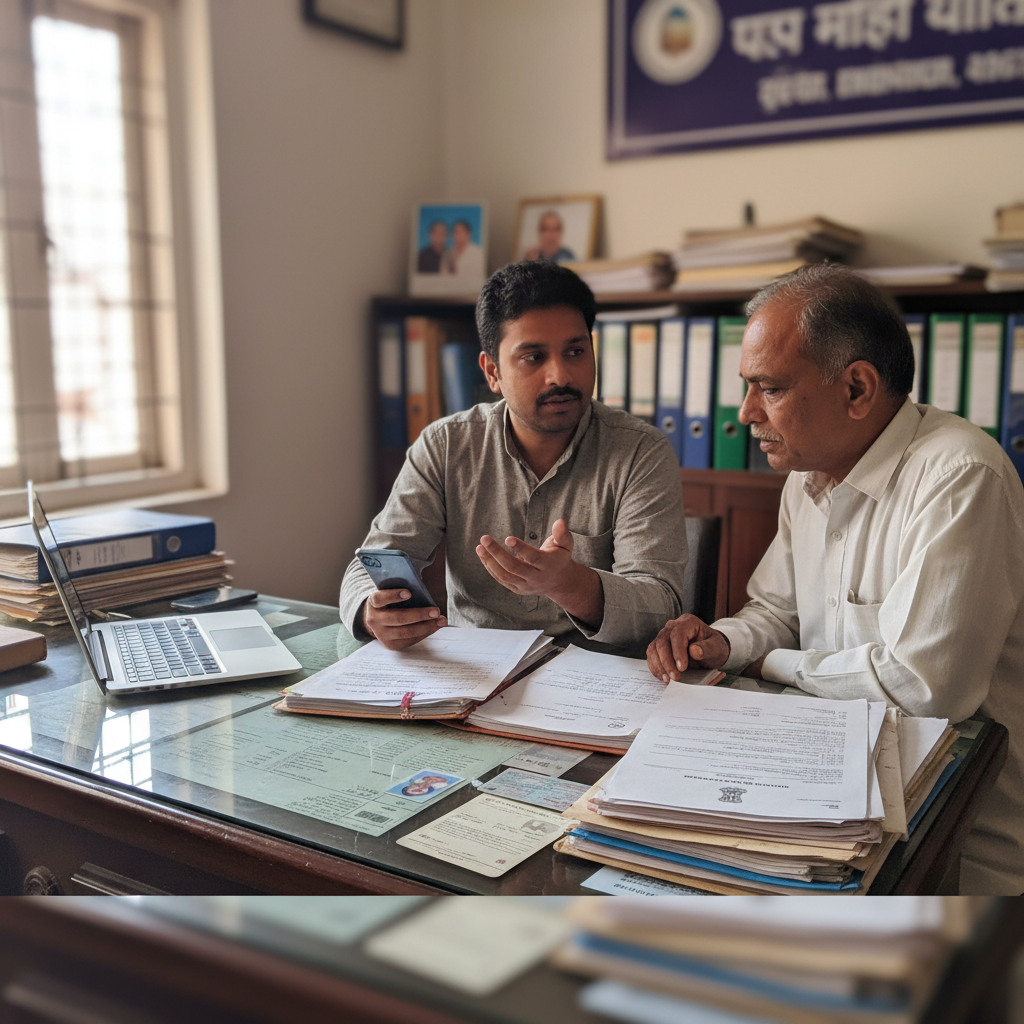
- Obtain the prescribed application form from the local authority’s office (Tahsildar, Revenue Division Officer, or Municipal Corporation).
- Fill out the application form with deceased’s details, date, and names and relationship of all potential heirs.
- Attach certified copies of the deceased’s death certificate, ration card, and supporting identity and address proofs of claimants.
- Submit a self-declaration affidavit attesting your connection to the deceased and list other heirs present or absent.
- If multiple heirs exist, securing a Noc letter or No Objection Certificate in the approved format from co-heirs will be necessary to avoid future disputes.
- Drop the completed dossier at the relevant local office. Obtain an acknowledgement for tracking the application’s progress.
- A field verification will follow, involving inquiries with neighbors, local representatives, or panchayat officials to confirm claims.
- The certificate is typically issued within 30 to 60 days, barring objections. In Karnataka, the timeline and process are governed by specific state notings, with some digitization for ease.
Retaining copies of all evidence and communication is highly recommended during this period, especially In Karnataka and Telangana, where procedural checks are strict.
Essential Documents for a Legal Heir Certificate
Precise documentation prevents unnecessary return and rejection of the application. Assemble these key papers before beginning the process:
- Duly filled application form with affixed photograph
- Self-attested copy of the deceased’s death certificate
- Proof of relationship such as ration card, Aadhar card, or family records
- Copy of identity and address proofs of each heir (Aadhar, passport, voter ID)
- Marriage certificate of applicant (if spouse)
- Birth/deed proof for children and parents
- Affidavit explicitly stating heir details and claim circumstances
- No objection letter format in original (if required by authority)
- Recent passport size photos of all applicants
All documents should be legible, recent, and, where needed, notarized to ensure acceptance. In case an objection certificate is requested, provide the signed Noc letter from co-heirs as per official Noc format guidelines.
Legal Heir Certificate vs. Succession Certificate: A Comparison
While many consider both certificates interchangeable, understanding their distinct applications is essential:
- A legal heir certificate primarily establishes succession rights for property transfer, utility accounts, pensions, and government benefits.
- A succession certificate is issued by a competent court and is specifically used to claim deceased’s debts and movable assets like bank deposits or shares. Courts issue this only after public notice and possible contest resolution.
- Obtaining a succession certificate involves a more complex procedure, including filing a court application and affidavit, publication of notice, and sometimes cross-examination.
- Certain city authorities, particularly in Maharashtra and Karnataka, may request both certificates for high-value or disputed property transfers.
Select the correct certificate in line with property type and inheritor objectives to avoid delays at registration or mutation stages.
Role of Affidavit, Deed, and Noc Letter in Claiming Property
Besides the legal heir certificate, various supporting documents play a pivotal role in demonstrating unchallenged right to property. These documents include affidavits, relevant deeds, and properly executed objection certificates. Their correct submission streamlines property mutation and khata transfer without prolonged disputes.
- Affidavit: A sworn statement on stamp paper, confirming relationship and unchallenged claim, signed by surviving heirs.
- Deed: In cases where earlier transfer or family partition occurred, attaching the deed is critical to confirm chain of title.
- Noc letter: The No Objection Certificate (Noc format) signed by all other legal heirs, formally acknowledging no dispute with property transfer or inheritance. In Karnataka, many local bodies require this document before making property entries in municipal records.
- Objection certificate: If any heir objects, their signed certificate and the court’s communication, if any, will form part of the record.
Ensure all documents follow the prescribed local property transfer guidelines for your jurisdiction, particularly in Telangana where municipal authorities verify Noc letter authenticity in challenging cases.
How State Differences Affect the Legal Heir Process
Though the overall process is similar, states may introduce specific procedures or documentation. For example:
- In Karnataka, authorities stress the Noc format and notarized affidavits, sometimes requiring verification by revenue or municipal officers before property transfer.
- In Tamil Nadu, the varisu certificate acts as the equivalent of a legal heir certificate and is mandatory for both urban and rural deeds.
- Telangana insists on direct verification, including field visits, which can extend turnaround times in property disputes.
Stay updated with local offices or consult legal advisors well-versed in your region to ensure timely processing and compliance.
Handling Disputes, Court Intervention, and Complex Scenarios
Disputed heirship or lack of consensus among successors can complicate property transfer. In such cases:
- Prepare to present a thorough affidavit and obtain court-acknowledged objection certificates if required.
- If any heir wishes to contest, the process may escalate to court, where a succession certificate could be demanded as proof beyond the legal heir certificate.
- The court may order additional inquiries, public notices, or even a temporary stay on transfer pending investigation.
Support from experienced property lawyers ensures smooth navigation through the judicial process, correct presentation of deed and affidavit, and timely securing of all required certificates.
Timelines and Tracking Your Legal Heir Certificate Application
The period for processing a legal heir certificate varies by city and caseload. On average, expect:
- 30 days where the process is mostly digital and no objections arise.
- 45-60 days in cities or cases involving multiple heirs, legal disputes, or village-based verification (especially In Karnataka and Telangana).
- Delays may occur if documentation is incomplete, affidavit formats are not in order, or objection certificate clarifications are needed.
Request acknowledgment receipts at every submission. Use online portals, if available, to track the certificate status—check your city’s specific guidelines or consult experts at PropResolve for up-to-date information.
Conclusion
Securing a legal heir certificate for property transfer is indispensable for a smooth inheritance process in India. Whether you are acting individually or managing the estate for your family, following every procedural and documentary guideline ensures legitimate succession without obstacles. As property and personal legal services grow in complexity, professionals at PropResolve are ready to provide reliable support, tailored advice, and clarity in these personal milestones. Begin your journey with confidence by gathering complete papers, following local norms, and leveraging expert legal backing for property transfer.
Need help with your legal documentation?
Talk to PropResolve. Verified Karnataka lawyers and full support for NRI and OCI families. We respond within one business day.